
Inside Integra’s Publisher Conversations at Frankfurt Book Fair 2026

Integra Editorial Author

In our conversations at Frankfurt Book Fair 2026, publishers were giving greater attention to how AI could work securely and effectively within their organisations. Many of those we met were already using it in some form. Their questions concerned implementation, the responsibilities that remain with their teams, and how to build confidence in the results.
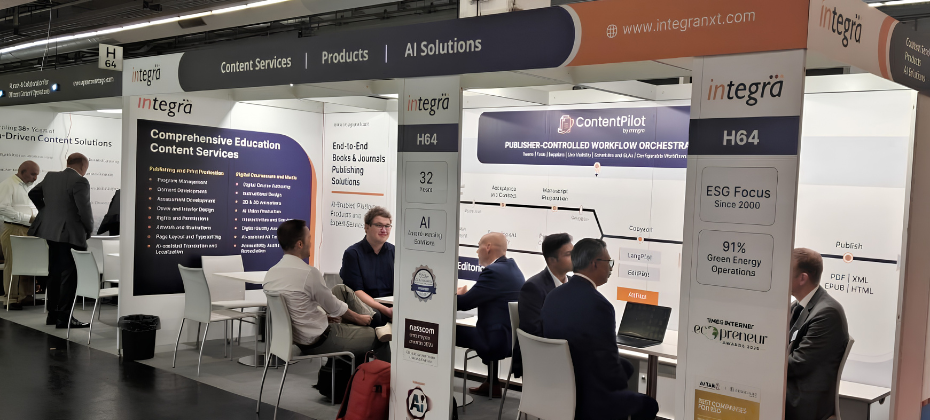
Integra arrived with a filled-to-the-brim meetings schedule and also presented EditorialPilot and ContentPilot at the Knowledge Hub. Much of our time was spent discussing specific opportunities with customers and industry colleagues. Those meetings offered a practical view of the decisions publishers are working through, with accessibility and trust continuing to shape the conversation.

Publishers are working through the conditions for AI adoption
Our team noted a growing willingness to use AI across editorial and production work. Adoption varied, and experimentation continued, but the discussions increasingly concerned how to implement it responsibly within existing operations.
Security was a recurring consideration. Publishers wanted to understand how they could put AI to work while maintaining confidence in their processes. In our view, that places greater weight on deployment choices, access to content, and the review points built into a workflow. These decisions need to reflect the publisher’s requirements and the consequences of the task being automated.
The role of editorial expertise is central to that discussion. Our recent article, Where AI Ends and Editorial Judgment Begins, examines which activities can be assisted by automation and where interpretation must remain with an editor or specialist. That distinction provides a useful basis for evaluating a publishing use case before choosing the technology.
Our showcases connected technology with publishing operations
At the Knowledge Hub, we presented two platforms addressing different parts of the publishing workflow.
The EditorialPilot showcase on 7 October focused on AI-assisted manuscript screening for journals. The platform supports checks across technical requirements, language quality and research integrity, with results that help editorial teams assess submissions. Editors retain responsibility for the decision. This was a practical example of how publishers can use AI to support routine assessment while preserving editorial authority.
On 8 October, we showcased ContentPilot, which gives publishers control over configurable workflows across teams, tools and suppliers. Live production tracking, alongside visibility into schedules and service-level agreements, helps publishers follow work across editorial and production stages, from intake through delivery.
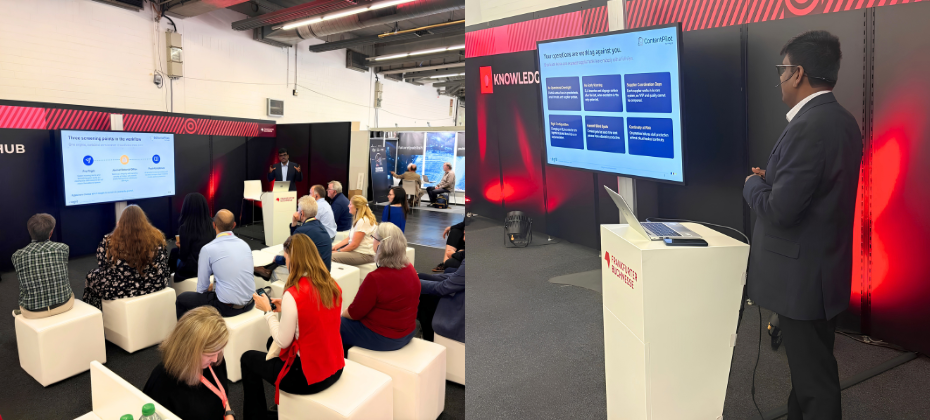
Together, the sessions showed how AI-assisted tasks can sit within a broader publishing operation supported by workflow orchestration and expert services. As publishers consider additional tools, the ability to coordinate their use and see how work progresses across the whole operation deserves equal attention.
Trust remains a strategic responsibility
Trust and provenance were prominent in our team’s reflections on the Frankfurt week, particularly the discussions at the STM conference. Paper mills and retractions have kept research integrity high on the agenda, with publishers considering policies and governance that can support confidence in published research.
For us, this reinforces the need to connect screening with the expertise required to investigate concerns. Automated checks can surface a signal. Its significance depends on context, and a consequential finding requires careful interpretation.
Our August article, Beyond the Manuscript, explores why coordinated misconduct can require examination across submissions and journals. It extends the discussion beyond individual checks to the relationships that may warrant investigation. Publishers evaluating screening tools need to understand what a tool can establish and where further scrutiny is necessary.
Accessibility continues to require practical answers
Accessibility remained a recurring topic in our publisher meetings. Our team heard continuing uncertainty around policy and future requirements, alongside interest in using AI to help meet accessibility needs.
For Integra, accessibility belongs in everyday content operations. Publishers need to consider how it is addressed during preparation and production, how outputs are reviewed, and who is responsible when remediation is required. AI can assist parts of that work, but evaluating the result remains essential.
The interest we heard in AI for accessibility needs to be supported by a repeatable process that combines technology with expert review. This becomes particularly relevant when publishers are planning work across a portfolio.
Agentic AI is prompting further questions about readiness
Our team also noted the visibility of agentic AI in vendor presentations, with attention turning to systems that can coordinate several tasks. This raises further questions about how publishers prepare content and govern the actions those systems take.
Our September article on AI readiness and agentic AI in education considers how structured content, provenance and explicit review points support controlled use. It offers a useful starting point for publishers examining the content and operating conditions a proposed agent workflow would require.
The meetings in Frankfurt were focused on active commercial opportunities. As those conversations develop, a defined use case and a credible way to evaluate it will matter. We left the fair with discussions to continue and a clearer sense of the implementation questions our publishing partners are prioritising.
Recent Blogs

When AI Can Do the Work, What Should Students Still Learn to Do?

When to Let AI In: A Cognitive Guide for Researchers