From workflows to wellbeing in publishing
This month’s edition of The Integra Brief looks at two sides of editorial work: building more controlled, efficient workflows and supporting the people who run them. From launching OneFlo to strengthen end-to-end publishing operations, to deepening conversations on emotional fitness and pre-review screening, the focus is on practical steps editors can take today. We also share how you can meet us at SSP 2026 and listen to the first episode of our new podcast, Upstream by Integra.

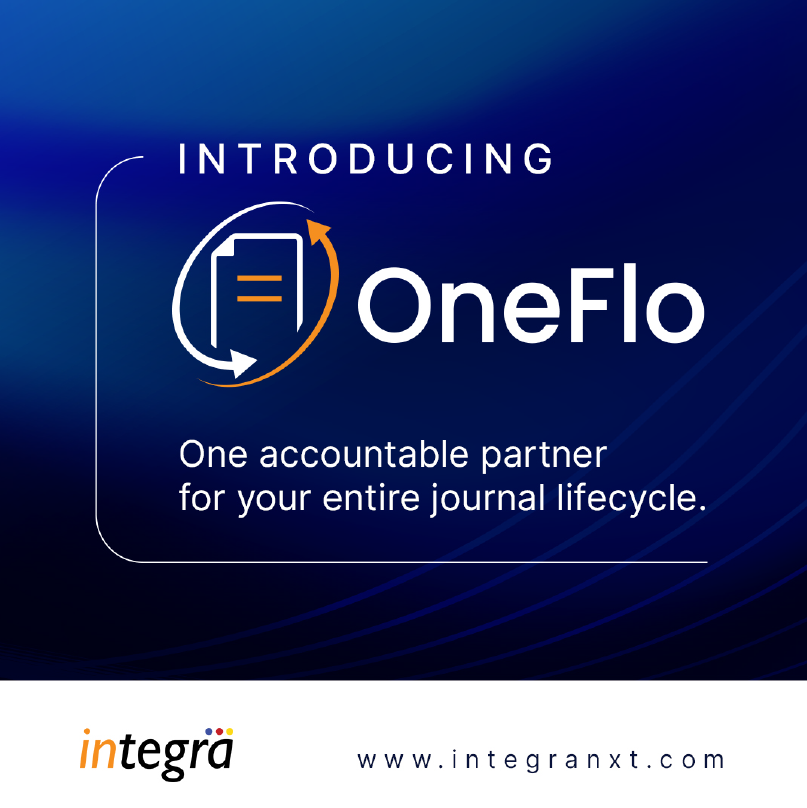
Integra is proud to return to the SSP Annual Meeting 2026, connecting with the scholarly publishing community around research integrity, peer review, AI enablement, and accessibility. You can schedule a dedicated one-on-one discussion with our team during the conference or meet us at the SSP EPIC Awards dinner, where Integra is a finalist in two categories.
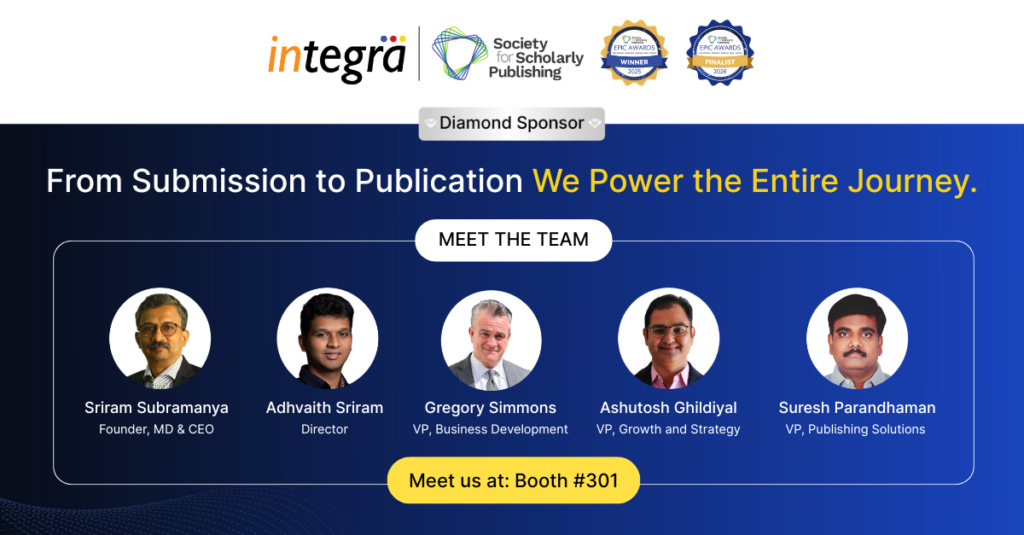

This month, Integra has launched OneFlo, our unified workflow platform designed to orchestrate complex, multi-stakeholder publishing processes from manuscript to market. By bringing tasks, automations, and status visibility together in a single environment, OneFlo helps publishers simplify operations, reduce handoff delays, and maintain consistent quality at scale.

Integra is launching Upstream by Integra, a new podcast hosted by Ashutosh Ghildiyal, featuring candid conversations with senior leaders across scholarly and educational publishing.
As the industry navigates shifts driven by AI, increasing research integrity demands, and evolving editorial models, the series will explore how leaders are rethinking workflows, value, and the future of publishing. Stay tuned for the first episode.

In a new piece at The Scholarly Kitchen, “Mental Health Awareness Mondays: The Validation Trap – Rethinking Confidence through Emotional Fitness,” Ashutosh Ghildiyal, VP Growth & Strategy at Integra explores how over-reliance on external validation can shape confidence and wellbeing. The article offers a practical lens for publishing professionals working in high-pressure environments, highlighting how emotional fitness can support more sustainable, resilient leadership and decision-making.

In a new Scholarly Kitchen piece, “Why Scholarly Societies Must Compete Through Stewardship, Not Scale,” Ashutosh Ghildiyal with Holly Koppel argues that societies’ strongest advantage is not volume but the depth of their community stewardship. The article explores how leaning into mission, trust, and disciplinary leadership can offer a more durable path than trying to mirror commercial publishers’ scale.

In our latest blog, “Control What Enters Peer Review,” outlines practical ways publishers can move integrity and quality checks further upstream in the editorial process. By strengthening screening before manuscripts reach peer reviewers, editorial teamsdelays, focus reviewer time on higher-value work, and build greater trust in their journals’ decisions.

In the latest episode, Meera returns in “Not Just Invitations,” confronting a flood of unanswered reviewer invites. As a reviewer intelligence layer activates, volume gives way to precision—fewer, better-targeted invitations secure reviewers faster, underscoring that reviewer selection is a system of informed decisions, not just outreach.
We would love to hear your thoughts. What did you find most interesting in this issue of The Integra Brief?
Write to us at [email protected] or drop a comment.
Recent Newsletters
The Integra Brief — September 2026
The Integra Brief | August 2026 Edition