This month’s edition of The Integra Brief looks at how publishers and education providers can strengthen trust in an AI world, across editorial decisions, governance, and curriculum design. We highlight the second episode of Upstream by Integra, our presence at the SSP Innovation Showcase and ISMTE North America, an expanded partnership with Taylor & Francis, practical resources on editorial screening and peer review, a new whitepaper on AI‑ready curriculum, and fresh perspectives on AI governance.

Taylor & Francis has renewed and expanded its partnership with Integra to provide tailored language support for authors submitting to Taylor & Francis, Routledge, and Dove journals. By extending the use of EditorialPilot at the point of submission, the collaboration helps assess language quality earlier, surface actionable feedback for authors, and streamline editorial workflows, supporting clearer communication, better reviewer comprehension, and more consistent decisions at scale.

Episode 2 of Upstream by Integra, “Truth in the Age of AI,” features Dominique de Roo, Chief Strategy Officer at De Gruyter Brill, in a conversation centered on one core thesis: AI can change how knowledge is accessed, but it cannot replace the systems that make knowledge trustworthy. Dominique argues that publishers must see themselves less as disseminators of information and more as custodians of validated knowledge, returning the focus to scientific epistemology.

Integra was honoured to join the SSP Innovation Showcase, a virtual event highlighting breakthrough tools and emerging technologies shaping scholarly publishing. Kayalvizhi Kumaran, GM – Product Delivery, will present EditorialPilot, showing how integrity‑first, data‑driven screening at submission helps editors make faster, more confident decisions at scale.

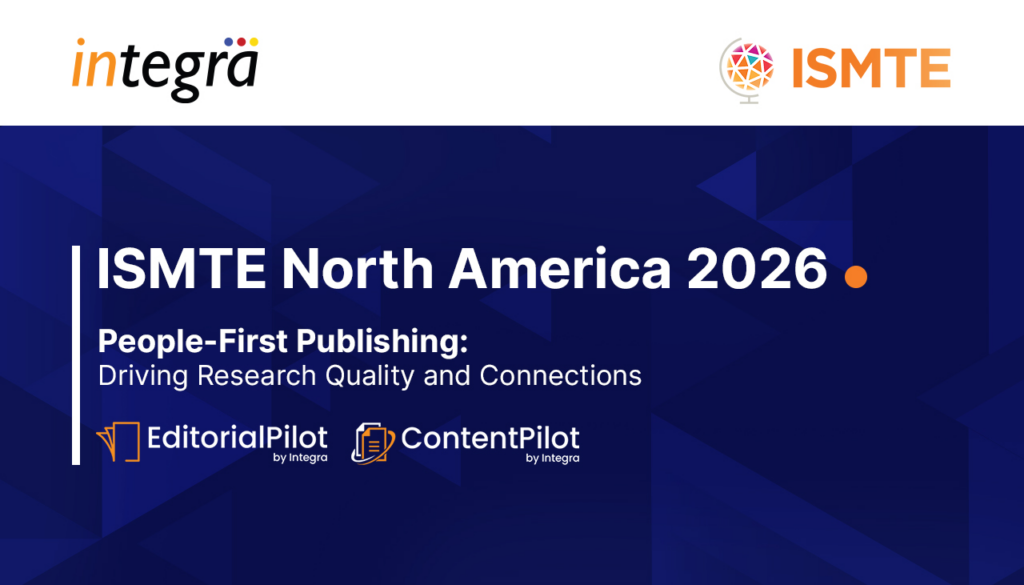
Integra participated in the ISMTE North American Virtual Event from July 22–24, 2026, bringing our award‑winning platforms to the managing and technical editor community. Dedicated sessions showcased how EditorialPilot and ContentPilot help teams strengthen research integrity, reduce manual workload, and orchestrate publishing operations across multiple systems and vendors.

In our latest Beyond Integration blog, we explore how ScholarOne users can transform editorial screening by embedding EditorialPilot directly into their submission workflows. The post outlines how AI‑powered checks across language, technical parameters, and research integrity provide editors with a reproducible quality view up front, enabling more structured triage, fewer avoidable delays, and a clearer path from submission to decision.

In a new article at The Scholarly Kitchen, “Before the Guardrails: Why AI Governance in Research Must Start with Purpose,” Ashutosh Ghildiyal argues that governance cannot be reduced to rules alone—it must begin with clarity on the purpose and values driving research and publishing. The piece explores why guardrails need to be anchored in mission, community trust, and epistemic responsibility if AI is to support, rather than distort, scholarly communication.


A new article in The Scholarly Kitchen, “Open Science 2.0: Building Understanding in an AI-Mediated World,” by Ashutosh Ghildiyal (VP, Growth & Strategy, Integra), Maria Machado, and Gareth Dyke, argues that the next phase of open science must extend beyond making research accessible to ensuring it is understandable, trustworthy, and actionable in an AI-mediated world.

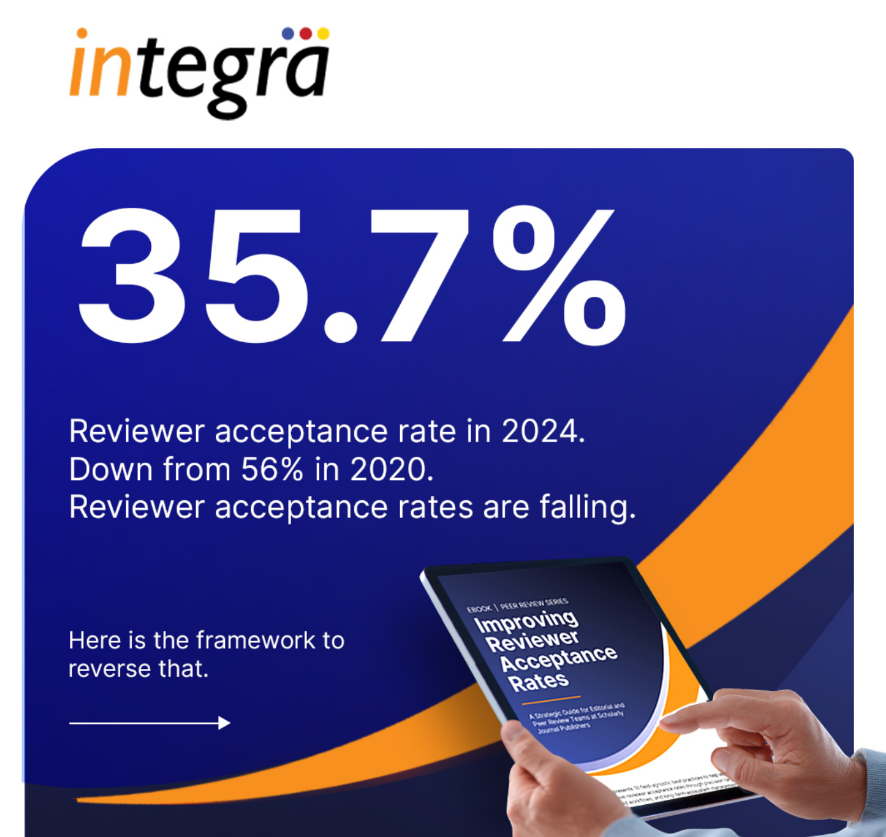
Integra’s eBook, Improving Reviewer Acceptance Rates, offers a practical guide for publishers and editorial teams looking beyond high‑volume invitations toward more targeted, data‑driven reviewer selection. It covers ways to increase acceptance rates, reduce time to secure reviewers, and align invitation strategies with workload, expertise, and engagement patterns, helping journals move from broadcast outreach to system‑guided decisions.

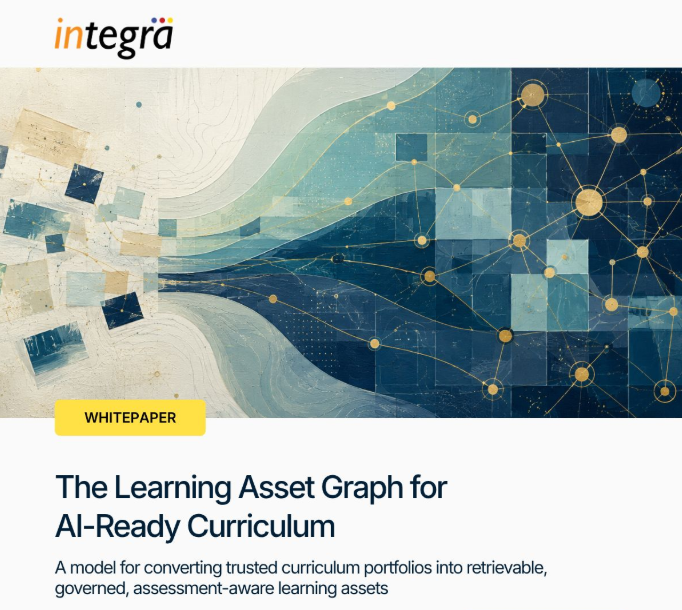
Education publishers are sitting on a goldmine of instructional assets; our new whitepaper, The Learning Asset Graph for AI‑Ready Curriculum, explains how to unlock that potential with applied AI. The paper shows how objectives, explanations, examples, assessments, rubrics, misconceptions, standards, provenance, and evidence can be represented as connected assets, and outlines a practical pilot path—from portfolio inventory and schema design to metadata enrichment, relationship mapping, AI‑ready packaging, and evaluation.
Want to see EditorialPilot or ContentPilot in action, or talk through your editorial workflow challenges? We’d love to hear from you.
Recent Newsletters
The Integra Brief — September 2026
The Integra Brief | August 2026 Edition