
Beyond Business as Usual: A Conversation with Sriram Subramanya on Sustainability at Integra
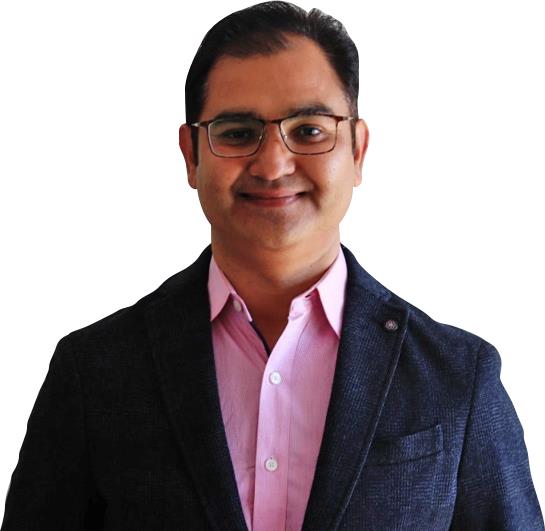
Ashutosh Ghildiyal Vice President – Growth and Strategy
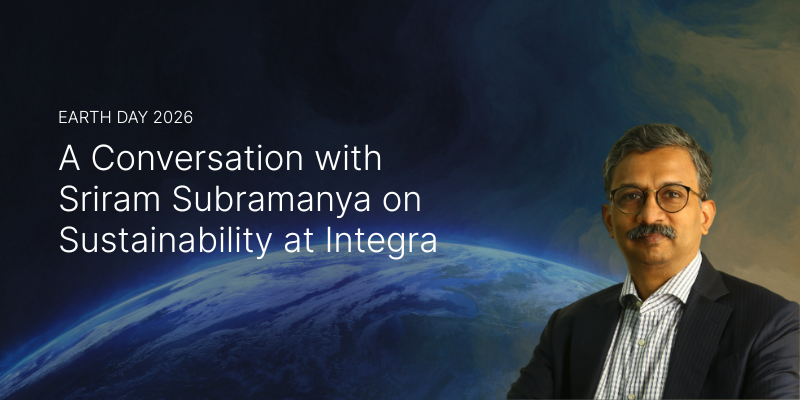
Ashutosh Ghildiyal, VP of Growth and Strategy, sits down with Sriram Subramanya, Founder, CEO and Managing Director, to explore Integra’s approach to sustainable business practices.
Ashutosh Ghildiyal: Sriram, thank you for taking the time for this conversation. Before we get into the specifics, I’d love to understand where it all began. What sparked your personal commitment to sustainability, and how did it take shape within Integra over time?
Sriram Subramanya: My interest in sustainability goes back much further than Integra itself. Growing up, I developed a strong respect for nature and the belief that we’re all custodians of the environment, not just consumers of its resources. That thinking was always part of how I approached life and work.
Since Integra’s inception, those values naturally became part of how we operated. Even before ESG entered mainstream business conversations, we were already asking ourselves simple but important questions: how do we cut waste, how do we save water, how do we make better use of what we have?
Sustainability wasn’t a formal strategy at first. It was simply how we thought about doing business responsibly from day one.
Ashutosh: Integra has since moved well beyond that intuitive foundation to something much more structured. There’s a clearly articulated Sustainability Pledge and a bold commitment to becoming carbon neutral by 2030, which remains relatively rare in our industry. What was the catalyst that led to making this commitment so formal and so public?
Sriram: Earth Day 2021 marked a shift in how we approached sustainability. For over two decades, we had been running several initiatives: rainwater harvesting wells in the campus for ground water recharge, man-made ponds for aquifer recharge and groundwater level improvement, tree planting, wastewater treatment, and energy efficiency projects.
The scale of the climate crisis, however, demanded bolder, more accountable action. When we took the pledge in 2021, several datapoints we looked at told a sobering story: wildlife populations had declined by 68% in just 50 years, one in three people worldwide lacked access to safe drinking water, CO₂ levels had reached their highest point ever and only 9% of all plastic ever produced had been recycled.
Those figures demanded a response. Making our carbon neutrality pledge for 2030 public wasn’t a marketing exercise; it was about holding ourselves accountable to real, measurable progress in and around the localities and societies we operate.
Ashutosh: You mentioned the 2030 carbon neutrality pledge was about accountability to measurable progress. What does it actually take to embed sustainability this deeply into an organization, and what are the practical challenges?
Sriram: Bridging aspiration and reality requires alignment across the whole company. Leadership commitment matters, but ownership has to be shared across the organization including procurement, facilities, IT, HR, and every other function, and most importantly every employee..
The scale of what we have built reflects that shared commitment:
- Over 34,000 trees planted across several initiatives including Integra’s private forest
- 41 million liters of rainwater harvested annually
- 1,703 metric tons of CO₂ absorbed each year
- Our Pondicherry office campus runs on 100% green energy and holds a LEED Platinum certification and is recognized as a Single-Use Plastic-Free campus
But this transformation didn’t happen overnight. They reflect thousands of small, consistent choices made by people at Integra who believe their daily actions matter. It meant helping everyone rethink how they carry lunch, water bottles, serve tea, run a meeting or indoor lighting.
And of course, business realities have to be considered. Many sustainable choices require upfront investment, so we’ve had to maintain a long-term view of returns.
Ashutosh: That long-term perspective is central to everything. On that note, Integra has outlined ambitious sustainability goals for 2030 that push well beyond where most companies are willing to go. Can you walk us through what we’re aiming to achieve?
Sriram: We have organized our plan around four main pillars, each with concrete, measurable targets tied directly to our long-term business strategy.
- Renewable energy: achieving 100% renewable energy across all operations by 2028.
- Water conservation: harvesting 50 million liters annually by 2030 to help recharge local aquifers.
- Carbon sequestration: planting 100,000 trees by 2030 to improve carbon capture, local biodiversity, and combat soil erosion.
- Sustainable procurement: raising eco-friendly sourcing from roughly 50% today to 75% by 2030.
Ashutosh: There is often skepticism in the broader business landscape about whether companies can genuinely balance profitability with environmental responsibility. Some critics argue that meaningful sustainability requires sacrificing growth. How do you respond to that?
Sriram: The skepticism is understandable. But, at Integra, we have seen the opposite play out. Sustainability, when built into operations rather than added on as a reporting exercise, generates measurable returns.
For example, our shift to 100% renewable energy at our Pondicherry campus will, over the long term, reduce energy costs. Our wastewater recycling and rainwater harvesting infrastructure reduce dependence on municipal supply. These were sound operational decisions that also aligned with our environmental responsibilities.
Companies with strong ESG practices consistently attract better talent, face lower regulatory risk, and build stronger relationships with clients who increasingly scrutinize their supply chains. Upfront investment is real, but the cost of inaction compounds over time.
What I have seen at Integra is that sustainability, when integrated into how you operate, becomes a source of growth, not a constraint.
Ashutosh: This level of organizational commitment also demands significant personal investment from leadership. What drives your individual motivation to keep pushing these boundaries, especially when the work is complex and results can take years to materialize?
Sriram: Two things drive me. First, the urgency of the climate crisis; there’s no luxury of slow, incremental change. Second, the sense of purpose that comes from knowing our work leaves a measurable, positive mark on the planet.
Whether it’s a tree that will filter air for decades, a liter of water conserved, or a policy that inspires another organization to act, it all adds up to something worth doing.
Ashutosh: Looking toward the future, there’s obviously the 2030 carbon neutrality target, but I’m curious about your vision beyond that milestone. What does Integra look like in 2035 or 2040?
Sriram: By 2030, we will have reached carbon neutrality. From there, the focus shifts to net zero and, in time, to becoming a carbon negative organization, removing more carbon than we emit.
I want us to expand reforestation beyond our own operational needs, adopt circular business models where waste becomes feedstock for other processes, and actively support smaller businesses making the sustainability transition.
I also see us playing a more active role in policy discussions, sharing what we have learned and advocating for stronger environmental standards.
I want our sustainability record to continue to speak through concrete actions and verifiable outcomes, not through how we talk about it.
Ashutosh: What advice would you offer to business leaders who are inspired by what we have discussed but aren’t sure where to begin with their own sustainability journey?
Sriram: Start small. Begin with an honest audit of where your operations consume the most resources or generate the most waste. That gives you a clear starting point. From there, pick one or two areas where early action is practical: switching to renewables, launching a recycling program, or reducing paper use across the organization.
Bring your people into it. Ask for their ideas and let them lead initiatives. And understand from the outset that this is a long-term commitment.
The most important thing to understand is that sustainability is not a project with a completion date. It is an ongoing discipline that deepens as the business grows.
Ashutosh: As we conclude, I want to come back to something you mentioned earlier about stewardship. In your view, what does it mean for a business to be a good steward in the 21st century?
Sriram: It means recognizing that our success is inseparable from the health of the environment and the communities where we operate. The decisions we make today about energy, water, and land shape conditions that extend well beyond our own timelines.
It means prioritizing long-term outcomes over short-term convenience, taking responsibility for the full impact of our operations, and ensuring that the world we hand to future generations is more stable, more livable, and better resourced.
It also means staying humble, acknowledging we don’t have all the answers, but committing to keep learning and improving.
Ashutosh: Sriram, what strikes me most about this conversation is how Integra has shown that genuine sustainability and long-term business growth reinforce each other. The goals we’ve discussed aren’t simply environmental targets; they reflect a clear-eyed view of what durable, responsible business looks like going forward.
Sriram: Thank you, Ashutosh. I’m grateful to everyone at Integra who believes that business growth and caring for the planet can and must go hand in hand. The road ahead will require commitment, creativity, and hard choices, but it is absolutely achievable. For us, sustainability is both a responsibility and a strategy, and it’s something I will continue to lead from the front.
About the Author
Ashutosh Ghildiyal is Vice President – Growth & Strategy at Integra, where he leads enterprise-wide initiatives spanning growth, strategy, marketing, innovation, and AI-driven solutions for scholarly publishing. With nearly 20 years of international leadership experience, he works at the intersection of scholarly publishing, artificial intelligence, and knowledge infrastructure. His interests include AI governance, research integrity, peer review, publishing innovation, and the future of human knowledge systems. Ashutosh hosts Upstream by Integra, a podcast featuring conversations with global leaders shaping the future of scholarly communication. He serves on the Board of Directors of the International Society of Managing and Technical Editors (ISMTE) and is a Chef at The Scholarly Kitchen, where he writes about scholarly communication, AI governance, research integrity, publishing strategy, and the future of knowledge.
Recent Blogs

From AI Governance to Human Agency: What Should Humans Remain Capable of Doing?
Inside Integra’s Publisher Conversations at Frankfurt Book Fair 2026