Insights from ASU+GSV Summit 2026: Human-centered, System-driven, AI-Supported, and Outcome-focused Learning

Integra Editorial Author

Structural Changes in Learning and Work
The education-to-workforce pipeline is no longer changing incrementally. The underlying structure is shifting.
Team Integra attended the ASU+GSV Summit and engaged with institutions, employers, and educators across the ecosystem. A consistent pattern emerged.
The shift affects how learning is designed, delivered, and measured. It is not limited to curriculum or technology adoption. AI is accelerating these changes, but outcomes depend on how systems are built around it.
The focus is moving toward a practical question: can learners apply what they know in real contexts?

From Access to Capability
For years, progress in education focused on access—access to content, platforms, and credentials. That constraint has largely been removed.
The current challenge is building capability.
Learners can now access information instantly. That does not mean they can apply it, solve problems, or adapt to new situations. The gap between knowledge and application is more visible.
This is why attention is shifting toward skills, competencies, and applied learning. Degrees still matter, but their role is changing. Employers are placing more weight on demonstrated ability.
The boundary between education and work is also narrowing. Learning is no longer confined to classrooms or specific phases of life. It is ongoing and closely tied to real tasks.

Systems, Not Tools
AI is often treated as the primary driver of change. In practice, results depend more on how systems are designed.
Organizations making progress are not those adopting the most tools. They are redesigning how learning works. This includes course structure, faculty support, assessment methods, and learner pathways.
Using AI as a separate layer leads to inconsistent experiences and limited adoption. When it is built into the system with clear intent, it supports consistency and broader use.
This distinction matters as organizations move beyond pilots into sustained implementation.

The Role of Human Relationships
Across sessions and discussions, one point came up repeatedly: relationships remain central to learning.
This is supported by research in learning science and classroom practice. Learners perform better when they have consistent support and clear communication with educators and peers.
AI systems can assist by providing feedback, identifying gaps, and expanding access to resources. They do not replace instructors, mentors, or peer interaction.
The more effective implementations use AI to support these relationships. For example, systems that highlight where learners are struggling allow instructors to intervene earlier.
A useful test is simple: does this approach strengthen interaction between people, or reduce it?
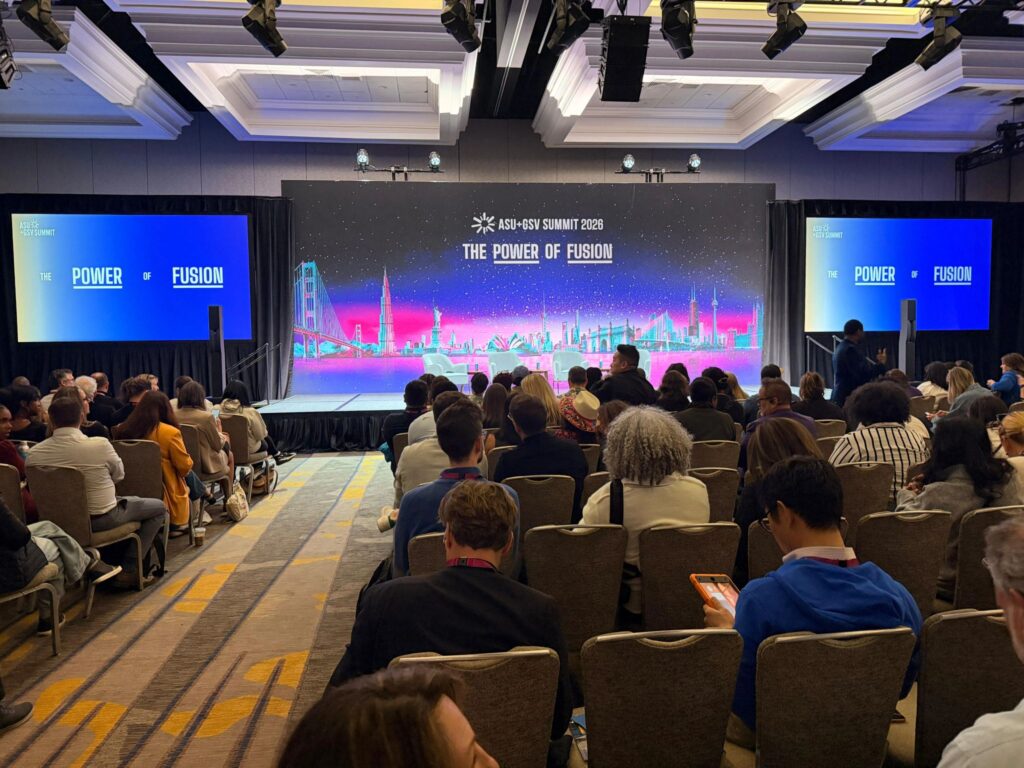
Many conversations reflected a shared focus on improving outcomes and a willingness to collaborate across roles. For Integra, this underscores the need to work alongside partners in building and testing learning systems in practice, where design decisions can be evaluated against real learner performance.
Rethinking Measurement
Traditional metrics such as completion rates, time spent, or platform activity provide limited insight. They show participation, not capability.
Measurement is shifting toward whether learners can apply skills in real tasks. This includes problem-solving, decision-making, and task performance in realistic settings.
Organizations investing in this type of measurement can identify gaps more clearly and adjust faster. It also brings learning closer to workplace expectations.
This changes how success is defined. The focus moves from inputs to outcomes.
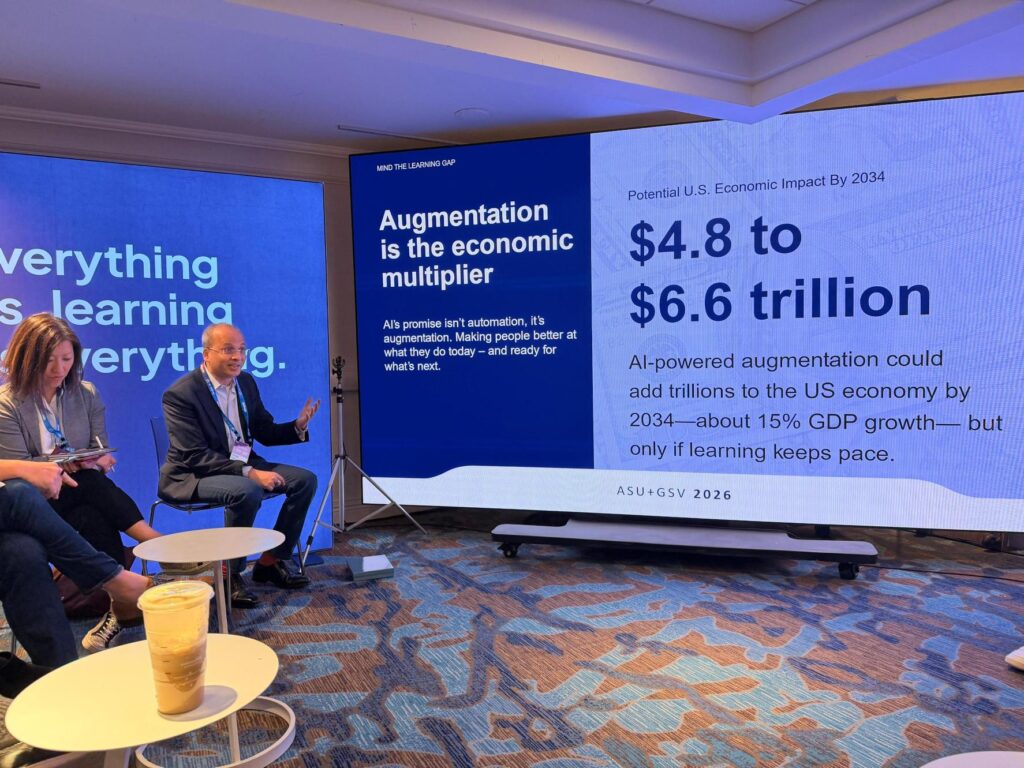
The Constraint Has Shifted
A key constraint has shifted.
Access to content and technology is no longer the main limitation. The challenge is designing learning experiences that consistently build capability.
This includes:
- training educators to use new tools effectively
- aligning curriculum with current skill demands
- adjusting learning paths based on learner progress
It also includes developing core cognitive skills such as critical thinking and decision-making. As AI systems handle more routine tasks, these skills become more important.
Technology supports this process. It does not replace it.
What This Means Going Forward
Across K–12, higher education, and workforce learning, a consistent pattern is emerging. Learning models are becoming more human-centered, system-driven, AI-supported, and focused on outcomes.
These changes are already visible in parts of the ecosystem. The challenge is implementing them in a way that is consistent and sustainable.
For institutions, this means shifting from tool adoption to system design, from content delivery to capability building, and from tracking activity to measuring outcomes.
For educators, the role is expanding. It requires new forms of support and ongoing development.
For learners, expectations are changing. Continuous learning is becoming standard.
The Constant
Amid these changes, one principle remains.
The value of any system, tool, or model depends on how well it helps learners build skills, adapt, and perform in real situations.
Organizations that keep this focus are more likely to adapt as these changes continue.

For Integra, this translates into building and testing models that connect content, delivery, and measurement more tightly. Our work focuses on making content usable across contexts, supporting accessible design, and helping organizations adjust workflows to accommodate AI without adding complexity. These efforts are carried out in close collaboration with partners and evaluated against learner outcomes.
Recent Blogs
From AI Governance to Human Agency: What Should Humans Remain Capable of Doing?

Inside Integra’s Publisher Conversations at Frankfurt Book Fair 2026